Chapter 1: So, What's the Luna Method, Anyway?
IN THIS CHAPTER
» Discovering what makes this method different
» Understanding the physics behind "no tension, no glue"
» Figuring out where the Luna Method fits among other extension styles
» Avoiding the mix-ups that confuse new clients
Picture someone like Maya: a drawer full of hope, a half-used box of tape-in strips, a bent bead tool from a past microlink appointment that left her scalp sore, and a sticky note reading "ask about damage." She never used any of it. She just kept reading reviews and closing the tab.
This chapter is for every Maya out there, which is to say, probably you. By the end, you'll know exactly what the Luna Method is, how it's different from the extensions you may have tried before, and which questions to bring to your first consultation so you walk in sounding like you've done this before, even if you haven't.
Meet Maya: Considering Her First Extensions
Maya is 29, has fine, slightly thinning hair, and wants length for an upcoming trip without feeling like she's wearing a helmet. She's never had extensions before, and the idea of beads or glue near her scalp makes her nervous. A friend mentioned "the Luna Method" and said something about "no tension," which sounded nice but also a little vague.
She did what most people do: she opened a search bar and got overwhelmed fast. Tape-in, fusion, microlink, hand-tied, NBR, IBE, and now Luna. The names blurred together, and nothing told her which one was actually built for hair like hers.
If you're in Maya's position, you're not behind. You're exactly where every new extension client starts, staring at a list of techniques with no shared vocabulary yet. That changes in the next few pages.
SMART MOVE: Before you book anything, write down your hair's two biggest concerns (thinning, breakage, scalp sensitivity, whatever applies) and bring that list to your consultation instead of trying to remember it on the spot.
What the Luna Method Actually Is
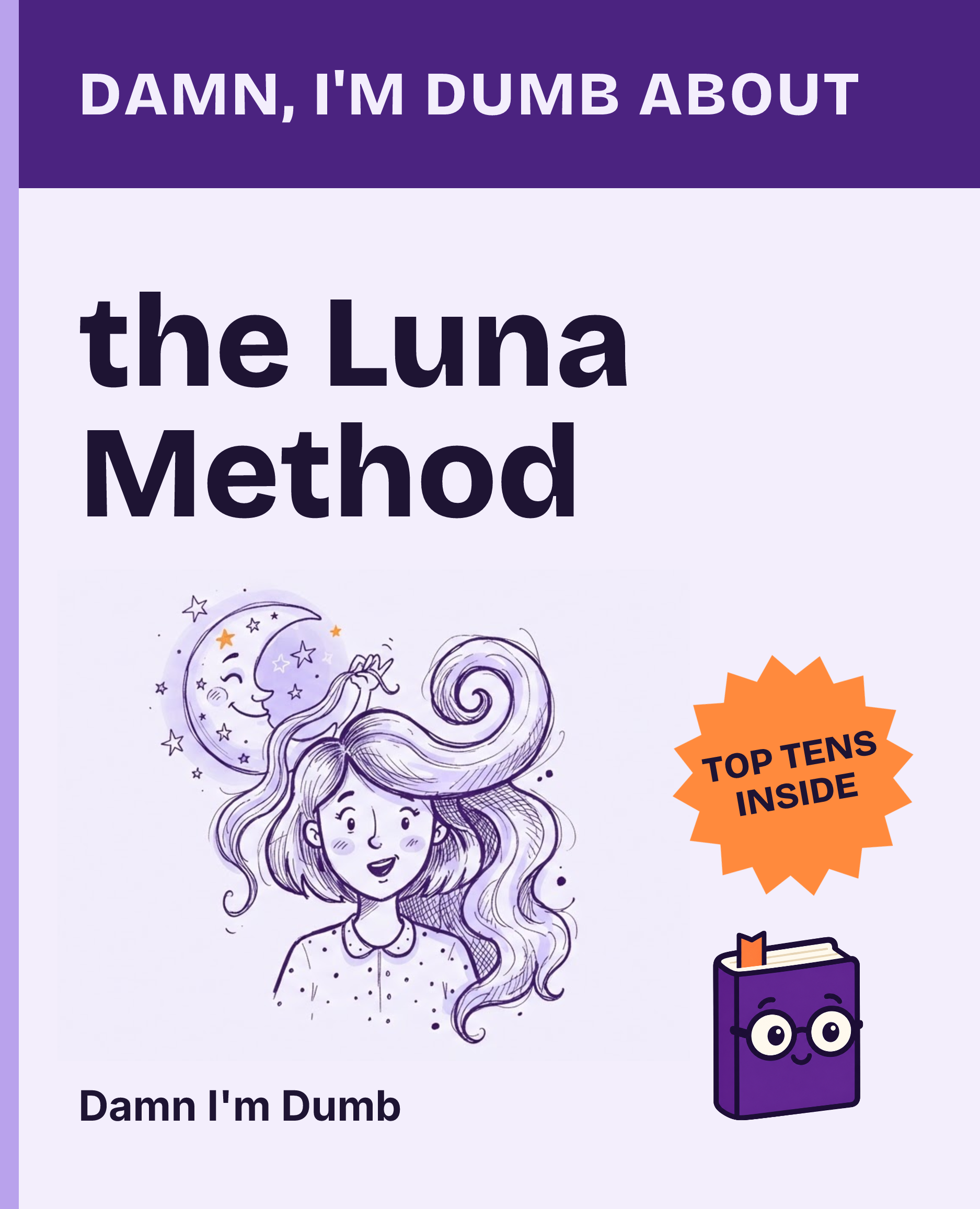
The Luna Method (sometimes called the Luna and Mauve Method) is a patent-pending, hand-tied weft extension technique. Hand-tied extensions means the wefts, which are strips of hair attached along a stitched edge, are sewn onto a thin braid or track by hand rather than clamped on with machine-made beads.
What sets the Luna Method apart is how little it touches your natural hair to get the job done. Each row typically uses just 4 to 7 points of contact, the spots where thread anchors the weft to your own hair, compared to methods that rely on dozens of beads running the length of a row. It also skips three things that are common headaches with other techniques: no glue, no tape, and no heat.
One more detail matters here: the end bead, a bead that secures the tail end of a weft in many hand-tied and beaded methods, is minimized or hidden entirely in a proper Luna Method install. Depending on the install, a stylist might use as few as 5 and up to around 20 contact points across a full head, placing up to 8 wefts per row when density calls for it.
This isn't a method you'll learn from a weekend video binge. It's taught as a professional certification course to licensed cosmetologists, which means the person doing your hair should have gone through real training, not just watched the same videos you did.
DON'T FORGET: Fewer contact points and no end beads are the two features that make the Luna Method instantly recognizable once you know to look for them.
How the Luna Method Differs from Other Methods
Picture five extension methods lined up side by side, each handling attachment in its own way. The comparison below gives you the shape of the field before you decide where you fit.
| Method | Attachment style | Heat, glue, or tape? | Typical scalp feel |
|---|---|---|---|
| Luna Method | Hand-tied weft, 4-7 points of contact, no end beads | None of the three | Minimal tension, built around skull shape |
| Tape-in | Adhesive tape strips sandwiching natural hair | Tape (adhesive) | Can feel heavy or pull as tape loosens |
| Glue/fusion/keratin bond | Individual strands fused with heated keratin | Heat and bonding agent | Point-specific tension at each bond |
| Microlink/IBE | Small beads clamped around sections of hair | None, but beads are clamped tight | Can feel tight, especially near the hairline |
| Traditional braid-and-sew | Wefts sewn onto a cornrow-style braid | None, but braid tension varies | Depends heavily on how tight the braid is |
Tape-ins attach with adhesive strips sandwiched around small sections of hair. They're quick to install, but the tape can slip or build residue over time, which is part of why Priya, who you'll meet in Chapter 2, eventually went looking for something gentler.
Glue, fusion, and keratin bond methods fuse individual strands of extension hair to your natural hair using heated keratin. The heat and the permanence of the bond are the tradeoffs here, and removal usually requires a solvent or more heat.
Microlink, sometimes marketed as IBE (Invisible Bead Extensions), clamps small beads around sections of natural hair to hold a strand or weft in place. It avoids heat and adhesive, but the sheer number of beads needed for a full head means a lot of small points of tension across your scalp.
Traditional braid-and-sew extensions sew a weft onto a cornrowed braid underneath. It's an older, well-established technique, but the tightness of the braid itself can create the kind of scalp strain the Luna Method is specifically designed to avoid.
The Luna Method borrows the hand-sewn logic of traditional sew-ins but strips away the beads, tape, and heat, leaning instead on fewer, smarter contact points. That's the throughline you'll see again in Chapter 4 when we walk through an actual install.
The Physics Behind the Method
Every hair extension method is really just an argument between two forces: tension and compression. Tension pulls, and too much of it concentrated in one spot is what leads to scalp soreness or, over time, strain on individual hairs. Compression presses, spreading weight out instead of yanking on it.
The Luna Method is built to let compression do the heavy lifting instead of tension. Rather than relying on a tight bead or a sticky bond to "hold on for dear life," a trained stylist positions each weft using bone placement, meaning the weft is placed according to the shape of your skull rather than just following your natural hairline or part. Your head's own structure, not the beads or thread, ends up supporting most of the extension's weight.
This is also why the few contact points that remain matter so much. With only 4 to 7 anchoring spots per row, each one needs to sit exactly right, which is a big part of what separates a trained Luna Method stylist from someone just winging a hand-tied technique. Done well, this approach is designed to reduce torque, the twisting pull that stresses hair follicles and the scalp over time.
NERD ALERT: Consistent pressure in the same spot, even gentle pressure, can add up over months. That's the physics reasoning the Luna Method is built around: spread the load, place it by bone structure, and skip the single points of strain that other methods sometimes create.
None of this means the method is risk-free or that technique doesn't matter. A stylist who skips the bone placement step and just copies the general look of hand-tied wefts isn't really doing the Luna Method, physics and all, even if the end result looks similar at a glance.
Common Name Mix-Ups to Avoid
Hand-tied extensions come in enough varieties that it's easy to assume they're all the same thing wearing different names. They're related but not identical, and knowing the difference saves you an awkward consultation moment.
NBR, or Natural Beaded Row, and IBE, Invisible Bead Extensions, are both names for beaded-row, hand-tied style installs that are related to the Luna Method's general family of techniques but aren't the same branded method. The giveaway is usually the bead count and the presence of visible end beads, which the Luna Method is specifically designed to avoid or hide.
It's also worth knowing, without taking sides, that there's an active trademark dispute involving the Luna Method's branding and origin claims. You don't need to referee that argument to get a great install. You just need a stylist who can clearly explain their contact-point count, their stance on end beads, and their actual certification, which we'll cover in Chapter 3.
QUICK CHECK: Am I picturing the right method?
- Can I name at least one thing the Luna Method skips (glue, tape, or heat)?
- Do I know roughly how many points of contact a Luna Method row uses?
- Can I explain the difference between a bead-heavy method and a Luna Method install?
- Do I know that "hand-tied" alone doesn't guarantee it's the Luna Method?
If you answered yes to most of these, you're ready for Chapter 2, where you'll find out whether your specific hair type is a good match. If you want to go straight to tools and finding a certified stylist, Chapter 3 is waiting for you.